LONG LINES DAI DIEN KINH QUEN LICH SU.
Practice time @
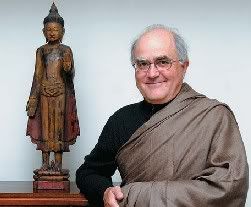 "Classics forgotten men of history" as the author Stephen Batchelor said more details would never say things to the life of Buddha. Here is the conversation between the author: Stephen Batchelor with Outlook India knowledge of language by fluent.
Q: What made him start working on a real Buddha? Batchelor: My interest is motivated by a project I was first introduced to the places where Buddha lived and preached teaching - Shravasti, Kusinagar, Gaya, Vaishali, Rajgir, Boddhgaya (1). For the first time, I had a clear sense of geography about the world of Buddha. It has created a certain pattern in which I began to read the Pali Tripitaka. I have started looking at texts in a different light. Until then, like many Buddhists, I had a vague idea about the real life of the Buddha are exposed like. Pali Tripitaka is like a window opened to eighty-year history of India's primitive, classic true history first. In certain way it presents a human world, a world in which God or gods do not really stand out and its people are struggling to control their fate. I also began to see the world of Buddha in the form of the development of politics and economics at that time. The more I read the more I try to connect the array of history together, especially since his enlightenment until nirvana. I was trying to awake with the human presence in this segment of history. And slowly I was able to connect them together into a story.
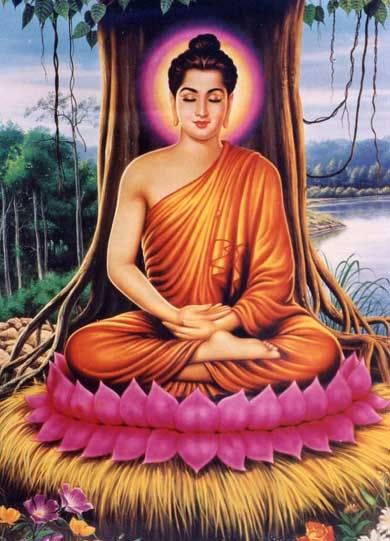
QUESTION: If the details that he discovered the Buddha's life and dating in the Pali Tripitaka, why it is less known explicitly? Batchelor: One of the reasons the story of He was not clear because the classical aggregation are not interested in the details. We are only interested in the preservation of Dharma - the teachings of the Buddha. They arranged three sequential organ and that depending on the age of the classic short-term. So we have: The Business School, Central Business, Anguttara Nikaya, the Business Journal and the State ministry. By breaking three organs such, it has been accidentally destroyed any sense of historical chronology. Only in a few classics, in which we really can have an array of narrative continuity of a true story. But when we put all the small array of history, drawn from the major source of the texts, we find that the small blade of history is not tied - not only because of the layout - but because of the formation the entire structure. All of us together reasonable, even the small typical history is portrayed on an ongoing basis. Here the existence buried in the Pali Tripitaka, about five or six thousand pages when translated, more or less of a picture of your heart. We put them together and we have a picture. Incomplete a whole, but it was enough to visualize. Q: And what picture?
Batchelor: The picture of ordinary people have about him is this prince, who grew up in a palace, to give up all and become a Buddha, traveling everywhere and proclaim the wonderful sermons and hundreds of monks who accompanied him in his travels. He taught and taught and then one day he lay down and passed. They did not think much enlightenment, but he has a responsibility to achieve the following: establishing of His teachings and the Sangha, the monastic community. He talked about this in some cases. What is the mission of his life. In order to do so, he can not only increase the delegation traveling to somewhere in the Himalayas. He could find the situation where he will be back to contentment with the rich, and where he can have a safe. Only where this can be provided in any degree is the prominent cities: Rajgir, Shravasti and to a lesser extent as Vaishali. He also faces a world of great conflict, trouble, violence and cruelty with the kings and dynasties emerging and growing army. We know from the scriptures that He has life is life - passed away at age eighty. And we also know his contact in a dynamic way of teaching. And his teaching is not restricted around the year - nuns living in monasteries that have expressed all levels of society, from upper-tier architecture to infrastructure, in a moment of history India where there is a change from the dominant republic urine Ganges basin to the prominence of the first dynasty established a final scene for the unity of India Chandragupta Maurya dynasty under about a hundred years later. Other issues that the Buddha was conducted continuously throughout his life was that his concern for the community of his clan Shakya. Sometimes talking about this issue after home leave, so he gave up certain responsibilities towards his family and his tribe, and just hang out and become a monk. This is not entirely true. After enlightenment, he came back billions of La Ve regulate himself with the family, and some of the most important subjects of his real relatives are: Devadatta, who had later efforts to increase union dominance; his son, Rahula, who was admitted to the Sangha as a teenager; di His form, Xa Ba Ba ha Ma De, the first ni; em uncle A Nan Da, who remember all the classics; a brother other uncles, A Lau Nau Da, is close to his disciples and he passed away at present, and an important way, his younger uncle, Mahanama , brother of Lau Nau A and A Nan Da Da, who had inherited the kingdom of the Shakya king after the death of the Province, his father. Thus, one aspect of the renunciation of Buddha Shakyamuni when he departed on the twenty-ninth year, is a key to abandon his role as future leaders of the Shakyamuni. QUESTION: But Shakyamuni not really a kingdom? Batchelor: Shakyamuni is one of the small republics of ancient India. It is not very big, a few hundred square miles is the maximum. At the Buddha was born, it was no longer an independent republic ruled by a council of elders and became a province of the kingdom of Kosala [2] with its capital Shravasti. This is a community ruled by the representatives of the family leaders, with one of them as the leader represents. At the Buddha was born, his father the king, Section United is the leader of the ruling council of the internal relations of the Shakya clan, but they were vassals of the king Kosamb i (3). Question: Is the Buddha became more political influence of his father King? Batchelor: In some ways there, yes. He has moved in the rotation are very active and politically powerful. He had the support of some of the most powerful political figures at the time: King Bimbisara in Rajgir and King Prasenajit in Shravasti. He is a very talented organization, a powerful leader of men and women, is a real person suco a viewpoint very clear about what he would do and he starts to perform . This is not the one who just sit and meditate and sometimes a sermon declared. He cares deeply in the world of him, not as a recluse and shunned renunciation world as Mahavira [4] . QUESTION: He has won the backing of the mighty kings of the world at that How Batchelor: The reason that the king had supported him - I do not think this is necessarily because they have a clear understanding of his philosophy - but because they saw him as genius a genius level - a character inspired, have a certain virtue to attract - a thinker or prophet, as what we call such a man today - and they want to be assigned with him. But there was also a period of great changes: the first city of India is only just emerging and lifestyle of the Brahmins and their followers classic Vedic system represents primarily lifestyle agriculture is changing mainly because of economic development. Now there's enough surplus production through countless abundant in the Ganges basin. The surplus production not only creates the merchant class - very rich, including the bankers - but also give people more fully dominant style to set the army and for those who can young men and women home and survive through begging, to pursue religious, philosophical and other ideas. There is a movement to an unknown future. People have seen the same towns and cities emerged the beginning of a new social order, how there are clouded by the authority of the Persians in the west. So I think the king is supporting the troops and their monks because they have ambitions of civilization. And of course, eventually, a hundred years after Buddha's nirvana, this in fact occurred: the rise of the Maurya Empire, the first king, Chandragupta Maurya is a map Jainism teachers, and Ashoka and a Buddhist, so they obviously are going in, when there is a movement in which Jainism and Buddhism are seen as alternatives to direct Brahman, and there was a fight ongoing competition between the different trends. QUESTION: Was there a conflict with Brahmanism existed during the Buddha? Batchelor: No, that began after the period of Ashoka. During the Buddha in the world, without the movement clearly identified, chungda not really emerged. Clearly, the Buddha was harshly critical of Brahmanical thought. He or criticize the social system that it legalized, the ideological and religious metaphor of what it was he dismissed directly. He has absolutely no time for any similar mention of God - he completely get rid of these things out of context of Buddhism. He became very suspicious about any kind of any eternal soul. And when we start looking at some key ideas of the Buddha, they are clearly framed in opposition to the orthodox ideas of the Austrian definition of letters and Vedic Brahmanism. I think he has found his critique of mainstream thought in his time as an essential part for the whole of his attempt to create a new order, a new world. QUESTION : Is there any description about the Buddha's body in the early books do not? Batchelor: Absolutely not. The only message that I have seen, a physical description of the Buddha only said that he looked no different from anyone else. He completely as any other persons unknown, as does any priest. The picture we have of the Buddha with hair rather funny, long left ear and all these things, there is an existing image from the very late after this date, although it is described before the Pali Tripitaka because during the Buddha must have a legend in Brahmanical literature speaks of a great artist - Mahapurusha - a great people - people who will come in a certain point of history and he will thirty-two good generals, and two involved in the Pali Tripitaka about a Brahman heard of such a Buddha has appeared on earth and he went to the Buddha in order to discover He was the thirty-two good generals do not, the things that he would then conducted and identify each one. Now it is clear that part of the myth. So the image of Buddha is not related to the existence of his body really but the fact that the other person to believe he is a Great Human is, therefore, should not have this distinction. QUESTION : He said that the Buddha was in exile at the end of his life? Batchelor: In Rajgir, King Bimbisara now is not (Qin Ba Sa La), which is Ajatasattu (A Soap World), who not only turned He poured his father's, which attempts to master his Devadatta is to overthrow the Buddha. Vaishali also in the fact that he has a lot of support. In the last times lower fetters in Vaishali, usually when he is not in his seat, is a house with a gable roof in a large forest, where he lives in a small village outside the city wall and he said with his monks go into and find shelter for their support. This is a strange - why does he do that? One possible reason for this is because he just was a man named Sunagatha denouncing at the school Vaishali, who was a priest in a Buddhist community and to continue and then complete the field Vaishali and said, "Dat Ta Si monk Gotama is a faker" So we know that he definitely lost the friendliness in Vaishali, he lost the affection in Shravasti, his home was attacked, the the Magadha is to treat him like a sound for their next. What we found in the fact that Buddha losing affection essential corresponding to the loss of his patron. During the last nine or ten months, he was constantly moving, this again raises the event in exile in this place. QUESTION: He also concluded that the Buddha can be poisoned in a way that all mind? Batchelor: He does not lack enemies. Pava, where he used the last meal, is one of the two main towns of Malla, a province of Kosala next Shakya tribe. Karayana, an army general Kosala now ravaging the Sakyamuni, from Malla, can be at Pava. Pava is also the place where Mahavira, the founders of Jainism is said to have died some years before, and when the Buddha came here they had a temple of his opponent. Classic just say that when the Buddha was invited to dine with his attendant in a house of a man named Cunda (Thuan Da), blacksmith. Cunda sukamadhava cooked dish, stew meat, like ham or bacon. "Give us meat," he said to Cunda, "and feed the rest of the other monks." When the meal was over, he said to Cunda, "Now he should bury any part of any remaining pork into a pit." Then he "suffered a serious illness and consumption of blood, and he endured a righteous way without a word of any trouble in charge." Word of his only response is said to Ananda: "We go to The Thi Na," which under the circumstances, appears to be "Get out of here." Question: Why do you think that he has eaten pork if he had known it would make him sick? Batchelor: This totally makes sense to me - he urged his death his teachings in order to survive. Why do people kill an old man who is about to die? Nothing is certain. We know that the Buddha was very serious. What objective is to poison an elderly age eighty certainly are endemic. It was ridiculous. Why did the Buddha say, "Give him food for us, and do not give it to anyone else." I do not think that to give food to the Buddha, it is for others, particularly religious Ananda, brother of his uncle, who only holds memories of everything that he can survive . If he kill Ananda, he killed Buddhism. I think Ananda is the goal. This is a whole body of the reading of certain texts. But once we put all these events in a chronological series, it's not hard to deduce conclusions. QUESTION: He told him buried without food one can eat it? Batchelor: Perhaps he was not sure, but do not want to chance it happens. Are right, we can explain in a different way, but we all have to keep a few more lines in this classic, not so much, we'll never know. QUESTION: You said that there is a power struggle after the Buddha's nirvana? Batchelor: Well, fortunately, Tripitaka not end after his nirvana. It ended with the best aggregate time, nine months after that organization. And it describes quite clearly a conflict of power: a struggle between Ananda, his cousin and a monk named Ma Ha Ca Houttuynia, who became a monk later and be held late described as a Brahman. The order said that he had received this transmission directly from the Buddha. He was not there when the Buddha nirvana but have come up with some monks for a week afterwards, just before the cremation ceremony is about to fire. Ma ha peak Ca Diep Buddha ceremony, and fire rigs were cremated, and then the conflict started. Ha Ca Ma Ananda Houttuynia not see as fully enlightened, and hence not qualified to have any leadership roles in the community. Ma said that he ha Ca Houttuynia completely enlightened and that he was the successor to the Buddha, even though the Buddha has publicly declared that he was not empowered leadership for the congregation to anyone. It's farce, the Buddhist community he now describes as the Sangha leaders (father of the Sangha). Now he is old in Latin Papa, or Pope, or Pope, is what the Buddha did not want to happen in the final months before his nirvana. Ma ha Ca Houttuynia then held a council in the first set Rajgir. He has held a full fundamental rights. And there are two economic in Pali Tripitaka, in his Ma ha Ca Houttuynia very rough off, almost abusive in his treatment of Ananda. He was dismissed by saying that Ananda Ananda was a boy. "He did not know of his own, the boy» And A Nan's response was: "But are these the first gray hair?" It's strange - why is the message there, why not be adjusted? There are some small excerpts, very detailed, that tells us about the conflict before the council the first set. QUESTION: Are the leaders in power is Houttuynia Ma ha Ca a nice problem for Buddhism? Batchelor: Ma ha Ca Houttuynia took leadership in a time of great uncertainty. A war is imminent. In certain ways, without a character like that, a strong person or authority the same coordinates, then perhaps Buddhism can not survive. I think it also should realize that - we need a person like power control, and to make every work is completed. A Nan perhaps too soft, he'd agreed to, he want to do everything in an understandable manner. QUESTION: The clarification of this story has made him reduce admiration with the Buddha? Batchelor: I think I admired him even more because I know him as a person rather than a mythical character. I think I have admiration for the Buddha until I started This is the first work for a more perfect character. But now I have a picture of a man we can imagine a very lively, living on this earth, in this country, faced with these characteristics - the ambition is linked to the king - and in the midst of all this struggle, set his teachings sufficiently complete so we can receive Today, I found this really magnificent.
"Classics forgotten men of history" as the author Stephen Batchelor said more details would never say things to the life of Buddha. Here is the conversation between the author: Stephen Batchelor with Outlook India knowledge of language by fluent.Q: What made him start working on a real Buddha? Batchelor: My interest is motivated by a project I was first introduced to the places where Buddha lived and preached teaching - Shravasti, Kusinagar, Gaya, Vaishali, Rajgir, Boddhgaya (1). For the first time, I had a clear sense of geography about the world of Buddha. It has created a certain pattern in which I began to read the Pali Tripitaka. I have started looking at texts in a different light. Until then, like many Buddhists, I had a vague idea about the real life of the Buddha are exposed like. Pali Tripitaka is like a window opened to eighty-year history of India's primitive, classic true history first. In certain way it presents a human world, a world in which God or gods do not really stand out and its people are struggling to control their fate. I also began to see the world of Buddha in the form of the development of politics and economics at that time. The more I read the more I try to connect the array of history together, especially since his enlightenment until nirvana. I was trying to awake with the human presence in this segment of history. And slowly I was able to connect them together into a story.
QUESTION: If the details that he discovered the Buddha's life and dating in the Pali Tripitaka, why it is less known explicitly? Batchelor: One of the reasons the story of He was not clear because the classical aggregation are not interested in the details. We are only interested in the preservation of Dharma - the teachings of the Buddha. They arranged three sequential organ and that depending on the age of the classic short-term. So we have: The Business School, Central Business, Anguttara Nikaya, the Business Journal and the State ministry. By breaking three organs such, it has been accidentally destroyed any sense of historical chronology. Only in a few classics, in which we really can have an array of narrative continuity of a true story. But when we put all the small array of history, drawn from the major source of the texts, we find that the small blade of history is not tied - not only because of the layout - but because of the formation the entire structure. All of us together reasonable, even the small typical history is portrayed on an ongoing basis. Here the existence buried in the Pali Tripitaka, about five or six thousand pages when translated, more or less of a picture of your heart. We put them together and we have a picture. Incomplete a whole, but it was enough to visualize. Q: And what picture?
Batchelor: The picture of ordinary people have about him is this prince, who grew up in a palace, to give up all and become a Buddha, traveling everywhere and proclaim the wonderful sermons and hundreds of monks who accompanied him in his travels. He taught and taught and then one day he lay down and passed. They did not think much enlightenment, but he has a responsibility to achieve the following: establishing of His teachings and the Sangha, the monastic community. He talked about this in some cases. What is the mission of his life. In order to do so, he can not only increase the delegation traveling to somewhere in the Himalayas. He could find the situation where he will be back to contentment with the rich, and where he can have a safe. Only where this can be provided in any degree is the prominent cities: Rajgir, Shravasti and to a lesser extent as Vaishali. He also faces a world of great conflict, trouble, violence and cruelty with the kings and dynasties emerging and growing army. We know from the scriptures that He has life is life - passed away at age eighty. And we also know his contact in a dynamic way of teaching. And his teaching is not restricted around the year - nuns living in monasteries that have expressed all levels of society, from upper-tier architecture to infrastructure, in a moment of history India where there is a change from the dominant republic urine Ganges basin to the prominence of the first dynasty established a final scene for the unity of India Chandragupta Maurya dynasty under about a hundred years later. Other issues that the Buddha was conducted continuously throughout his life was that his concern for the community of his clan Shakya. Sometimes talking about this issue after home leave, so he gave up certain responsibilities towards his family and his tribe, and just hang out and become a monk. This is not entirely true. After enlightenment, he came back billions of La Ve regulate himself with the family, and some of the most important subjects of his real relatives are: Devadatta, who had later efforts to increase union dominance; his son, Rahula, who was admitted to the Sangha as a teenager; di His form, Xa Ba Ba ha Ma De, the first ni; em uncle A Nan Da, who remember all the classics; a brother other uncles, A Lau Nau Da, is close to his disciples and he passed away at present, and an important way, his younger uncle, Mahanama , brother of Lau Nau A and A Nan Da Da, who had inherited the kingdom of the Shakya king after the death of the Province, his father. Thus, one aspect of the renunciation of Buddha Shakyamuni when he departed on the twenty-ninth year, is a key to abandon his role as future leaders of the Shakyamuni. QUESTION: But Shakyamuni not really a kingdom? Batchelor: Shakyamuni is one of the small republics of ancient India. It is not very big, a few hundred square miles is the maximum. At the Buddha was born, it was no longer an independent republic ruled by a council of elders and became a province of the kingdom of Kosala [2] with its capital Shravasti. This is a community ruled by the representatives of the family leaders, with one of them as the leader represents. At the Buddha was born, his father the king, Section United is the leader of the ruling council of the internal relations of the Shakya clan, but they were vassals of the king Kosamb i (3). Question: Is the Buddha became more political influence of his father King? Batchelor: In some ways there, yes. He has moved in the rotation are very active and politically powerful. He had the support of some of the most powerful political figures at the time: King Bimbisara in Rajgir and King Prasenajit in Shravasti. He is a very talented organization, a powerful leader of men and women, is a real person suco a viewpoint very clear about what he would do and he starts to perform . This is not the one who just sit and meditate and sometimes a sermon declared. He cares deeply in the world of him, not as a recluse and shunned renunciation world as Mahavira [4] . QUESTION: He has won the backing of the mighty kings of the world at that How Batchelor: The reason that the king had supported him - I do not think this is necessarily because they have a clear understanding of his philosophy - but because they saw him as genius a genius level - a character inspired, have a certain virtue to attract - a thinker or prophet, as what we call such a man today - and they want to be assigned with him. But there was also a period of great changes: the first city of India is only just emerging and lifestyle of the Brahmins and their followers classic Vedic system represents primarily lifestyle agriculture is changing mainly because of economic development. Now there's enough surplus production through countless abundant in the Ganges basin. The surplus production not only creates the merchant class - very rich, including the bankers - but also give people more fully dominant style to set the army and for those who can young men and women home and survive through begging, to pursue religious, philosophical and other ideas. There is a movement to an unknown future. People have seen the same towns and cities emerged the beginning of a new social order, how there are clouded by the authority of the Persians in the west. So I think the king is supporting the troops and their monks because they have ambitions of civilization. And of course, eventually, a hundred years after Buddha's nirvana, this in fact occurred: the rise of the Maurya Empire, the first king, Chandragupta Maurya is a map Jainism teachers, and Ashoka and a Buddhist, so they obviously are going in, when there is a movement in which Jainism and Buddhism are seen as alternatives to direct Brahman, and there was a fight ongoing competition between the different trends. QUESTION: Was there a conflict with Brahmanism existed during the Buddha? Batchelor: No, that began after the period of Ashoka. During the Buddha in the world, without the movement clearly identified, chungda not really emerged. Clearly, the Buddha was harshly critical of Brahmanical thought. He or criticize the social system that it legalized, the ideological and religious metaphor of what it was he dismissed directly. He has absolutely no time for any similar mention of God - he completely get rid of these things out of context of Buddhism. He became very suspicious about any kind of any eternal soul. And when we start looking at some key ideas of the Buddha, they are clearly framed in opposition to the orthodox ideas of the Austrian definition of letters and Vedic Brahmanism. I think he has found his critique of mainstream thought in his time as an essential part for the whole of his attempt to create a new order, a new world. QUESTION : Is there any description about the Buddha's body in the early books do not? Batchelor: Absolutely not. The only message that I have seen, a physical description of the Buddha only said that he looked no different from anyone else. He completely as any other persons unknown, as does any priest. The picture we have of the Buddha with hair rather funny, long left ear and all these things, there is an existing image from the very late after this date, although it is described before the Pali Tripitaka because during the Buddha must have a legend in Brahmanical literature speaks of a great artist - Mahapurusha - a great people - people who will come in a certain point of history and he will thirty-two good generals, and two involved in the Pali Tripitaka about a Brahman heard of such a Buddha has appeared on earth and he went to the Buddha in order to discover He was the thirty-two good generals do not, the things that he would then conducted and identify each one. Now it is clear that part of the myth. So the image of Buddha is not related to the existence of his body really but the fact that the other person to believe he is a Great Human is, therefore, should not have this distinction. QUESTION : He said that the Buddha was in exile at the end of his life? Batchelor: In Rajgir, King Bimbisara now is not (Qin Ba Sa La), which is Ajatasattu (A Soap World), who not only turned He poured his father's, which attempts to master his Devadatta is to overthrow the Buddha. Vaishali also in the fact that he has a lot of support. In the last times lower fetters in Vaishali, usually when he is not in his seat, is a house with a gable roof in a large forest, where he lives in a small village outside the city wall and he said with his monks go into and find shelter for their support. This is a strange - why does he do that? One possible reason for this is because he just was a man named Sunagatha denouncing at the school Vaishali, who was a priest in a Buddhist community and to continue and then complete the field Vaishali and said, "Dat Ta Si monk Gotama is a faker" So we know that he definitely lost the friendliness in Vaishali, he lost the affection in Shravasti, his home was attacked, the the Magadha is to treat him like a sound for their next. What we found in the fact that Buddha losing affection essential corresponding to the loss of his patron. During the last nine or ten months, he was constantly moving, this again raises the event in exile in this place. QUESTION: He also concluded that the Buddha can be poisoned in a way that all mind? Batchelor: He does not lack enemies. Pava, where he used the last meal, is one of the two main towns of Malla, a province of Kosala next Shakya tribe. Karayana, an army general Kosala now ravaging the Sakyamuni, from Malla, can be at Pava. Pava is also the place where Mahavira, the founders of Jainism is said to have died some years before, and when the Buddha came here they had a temple of his opponent. Classic just say that when the Buddha was invited to dine with his attendant in a house of a man named Cunda (Thuan Da), blacksmith. Cunda sukamadhava cooked dish, stew meat, like ham or bacon. "Give us meat," he said to Cunda, "and feed the rest of the other monks." When the meal was over, he said to Cunda, "Now he should bury any part of any remaining pork into a pit." Then he "suffered a serious illness and consumption of blood, and he endured a righteous way without a word of any trouble in charge." Word of his only response is said to Ananda: "We go to The Thi Na," which under the circumstances, appears to be "Get out of here." Question: Why do you think that he has eaten pork if he had known it would make him sick? Batchelor: This totally makes sense to me - he urged his death his teachings in order to survive. Why do people kill an old man who is about to die? Nothing is certain. We know that the Buddha was very serious. What objective is to poison an elderly age eighty certainly are endemic. It was ridiculous. Why did the Buddha say, "Give him food for us, and do not give it to anyone else." I do not think that to give food to the Buddha, it is for others, particularly religious Ananda, brother of his uncle, who only holds memories of everything that he can survive . If he kill Ananda, he killed Buddhism. I think Ananda is the goal. This is a whole body of the reading of certain texts. But once we put all these events in a chronological series, it's not hard to deduce conclusions. QUESTION: He told him buried without food one can eat it? Batchelor: Perhaps he was not sure, but do not want to chance it happens. Are right, we can explain in a different way, but we all have to keep a few more lines in this classic, not so much, we'll never know. QUESTION: You said that there is a power struggle after the Buddha's nirvana? Batchelor: Well, fortunately, Tripitaka not end after his nirvana. It ended with the best aggregate time, nine months after that organization. And it describes quite clearly a conflict of power: a struggle between Ananda, his cousin and a monk named Ma Ha Ca Houttuynia, who became a monk later and be held late described as a Brahman. The order said that he had received this transmission directly from the Buddha. He was not there when the Buddha nirvana but have come up with some monks for a week afterwards, just before the cremation ceremony is about to fire. Ma ha peak Ca Diep Buddha ceremony, and fire rigs were cremated, and then the conflict started. Ha Ca Ma Ananda Houttuynia not see as fully enlightened, and hence not qualified to have any leadership roles in the community. Ma said that he ha Ca Houttuynia completely enlightened and that he was the successor to the Buddha, even though the Buddha has publicly declared that he was not empowered leadership for the congregation to anyone. It's farce, the Buddhist community he now describes as the Sangha leaders (father of the Sangha). Now he is old in Latin Papa, or Pope, or Pope, is what the Buddha did not want to happen in the final months before his nirvana. Ma ha Ca Houttuynia then held a council in the first set Rajgir. He has held a full fundamental rights. And there are two economic in Pali Tripitaka, in his Ma ha Ca Houttuynia very rough off, almost abusive in his treatment of Ananda. He was dismissed by saying that Ananda Ananda was a boy. "He did not know of his own, the boy» And A Nan's response was: "But are these the first gray hair?" It's strange - why is the message there, why not be adjusted? There are some small excerpts, very detailed, that tells us about the conflict before the council the first set. QUESTION: Are the leaders in power is Houttuynia Ma ha Ca a nice problem for Buddhism? Batchelor: Ma ha Ca Houttuynia took leadership in a time of great uncertainty. A war is imminent. In certain ways, without a character like that, a strong person or authority the same coordinates, then perhaps Buddhism can not survive. I think it also should realize that - we need a person like power control, and to make every work is completed. A Nan perhaps too soft, he'd agreed to, he want to do everything in an understandable manner. QUESTION: The clarification of this story has made him reduce admiration with the Buddha? Batchelor: I think I admired him even more because I know him as a person rather than a mythical character. I think I have admiration for the Buddha until I started This is the first work for a more perfect character. But now I have a picture of a man we can imagine a very lively, living on this earth, in this country, faced with these characteristics - the ambition is linked to the king - and in the midst of all this struggle, set his teachings sufficiently complete so we can receive Today, I found this really magnificent.
----------------------------------------------------
(1) Shravasti: Xa of bars, Kusinagar: The Na, Gaya: The Cross, Vaishali: Guard detachment, Rajgir: Rajgir, Boddhgaya: Gaya Enlightenment. (2) short Kieu (3) overseas Enjoy Di (4) Mahavira (chu. .. Tamil Kannada words ... ... ("Arugan") means "Great Hero" or "great hero", was born in 599 BC-527 BC loss) real name is Vardhamana and who founded Jainism (Jaina direction), a religion the same time as Buddhism. Which he is a prince but gave up the supply of gold, Electric gem to the forest and enlightened practice. After the martyrdom, he was aware of many issues, which have tried to go beyond skepticism is prevalent in ancient Indian society. He endorsed the doctrine of "Naya" and try to prove the feasibility of views on common issues, he refined and supplemented, build direct Jaina doctrine. (5) "You do not Know Your measure, boy. " (6) "But These are not gray hair?" Gray hair: special colors occur naturally for older people, usually people with hair in its natural colors from gray and then white. Over forty percent of Americans have some gray hair in about forty years, but white hair may appear very early in childhood.END=VIETNAMESE TRANSLATE ENGLISH BY BACH LIEN HOA.NAM MO SHAKYAMUNI BUDDHA.( 3 TIMES ).5/12/2011.

No comments:
Post a Comment